

Aerial Silks vs Aerial Hoop vs Sling: Which One Should You Try First?

Updated: Nov 5
Silks, hoop or sling? If you're new to aerial, the choice can feel bigger than it is. Here's an honest look at all three, so you can pick the one that fits you best.
All three are taught from zero at our studio, and you don't need strength, flexibility, or any kind of background to start.
What differs is how each one feels in your hands and body on day one. Let's go through them.

Aerial sling: the gentlest way in
What it is
Aerial sling, also called aerial hammock, is a single length of fabric rigged as a loop. You sit in it, hang from it, wrap and spin.
What it feels like
Because the fabric carries your weight from the first minute, your first class is spent moving rather than working out how to hold on.
It's not aerial yoga, though. The sling hangs high, and you train mounts, inversions, spins and sequences the same way you would on silks or hoop.
Who it suits
Sling suits anyone who wants to start in the air without a strength barrier in the way. It asks less of your grip and upper body than silks or hoop. If you have never tried aerial before, this is where we suggest you start.
What to expect
Your first sessions cover how the sling takes your weight, how to mount it, foundational seats and wraps, and your first inversions. More about aerial sling
Aerial silks: strength and flow
What it is
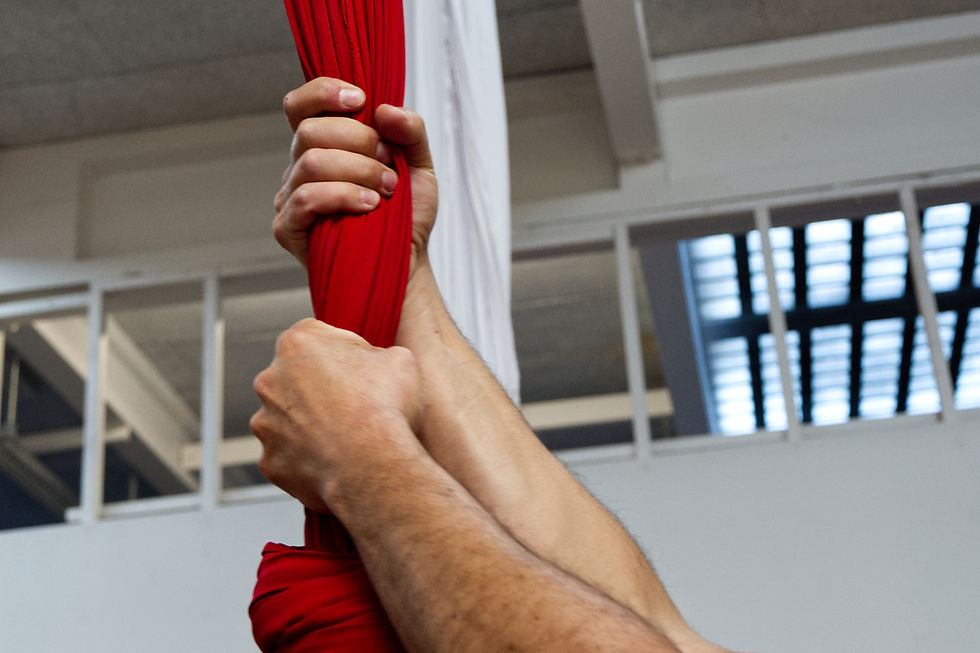
Aerial silks (also called fabric or tissue) are two long pieces of fabric hanging from the ceiling.
You climb, wrap yourself in, and hold shapes in the air. It's a blend of dance, acrobatics and strength training.
What it feels like
Silks ask the most of your grip, arms and core at the start, because you create your own structure with the fabric.
The first session is humbling. A few weeks in, most beginners are surprised by how quickly their body adapts.
Who it suits
Silks suit people who love flowing, creative movement and want a full-body challenge that builds grip strength, flexibility and body awareness.
If you want to feel genuinely strong and learn something that takes real skill, this is your discipline.
What to expect
You'll learn how to hold the silks, how to use your feet, and your first climb. Over time you add wraps, locks and poses, fluid transitions, and eventually drops. More about aerial silks
Aerial hoop: shapes with something solid to hold
What it is
Aerial hoop, also called lyra, is a steel ring suspended from the ceiling. You sit, spin, and move through poses inside and around it.
What it feels like
The rigid ring gives you clear contact points and a stable base to build from. Many beginners find hoop a little friendlier than silks to start with, though both are open to complete newcomers.
Who it suits
Hoop suits anyone who loves the idea of making beautiful shapes in the air with something solid to hold onto. It's great for building upper body and core strength.
What to expect
You'll learn how to mount and sit in the hoop safely, then poses, balances and transitions, spins, and sequences that flow together. More about aerial hoop
Side by side
Aerial sling: one loop of fabric that carries your weight. The least demanding start, and the best first step if you're worried about upper body strength.
Aerial silks: two long pieces of fabric you climb and wrap. The most demanding of the three to begin, with the most room for flowing, creative movement.
Aerial hoop: a steel ring you sit, hang and spin in. Something solid to hold, and a little friendlier than silks at the start.
All three: taught from complete beginner level, in small classes, low to the ground with crash mats down and your teacher right next to you.
How to choose
There's no wrong choice, and most people end up trying more than one. If you'd like a nudge, start with what you want out of it.
Worried about strength? Start on sling. The fabric holds you while you learn to move.
Want to get strong? All three build strength. Silks ask the most of your grip and upper body from day one; hoop is a great all-rounder for core and upper body.
Love to dance and flow? Silks, with their wraps, transitions and sequences, are made for you.
Want something solid to hold? Hoop gives you a fixed ring to sit and balance in.
Nervous about heights? Any of them. In beginners classes you work low, rarely more than a metre or two off the ground, and you never go higher than you're ready for.
Just want to have fun? Use a trial to try them all and see which one you fall for.
A few quick answers
Do I need to be strong or flexible to start?
No. You build strength and flexibility by doing aerial, not before. We work with the range of motion you have now, and if strength is your worry, sling carries your weight while you learn.
Is aerial sling the same as aerial yoga?
No, it's the most common mix-up. Aerial yoga uses a low hammock as a prop for yoga poses. Aerial sling hangs high, and you train mounts, inversions, spins and sequences, just like on silks or hoop.
Can I try more than one apparatus?
Yes. Our 3-class trial lets you use all three classes on one discipline, or spread them across sling, silks and hoop to find your favourite. No need to decide up front.
What should I wear?
Fitted clothes that cover your legs, like leggings and a fitted top. No zips, jewellery or metal. Bare feet or grip socks are fine. Read our full guide: What to Wear to Aerial Silks.
Your next step
The easiest way to find your apparatus is our 3-class trial (€45, valid for one month). Pick and mix sling, silks and hoop, or go deep on one. Mats and all apparatus are included, so all you need to bring is yourself.
👉 Book your trial: New to Aerial? Start Here
👉 Questions first? Read the FAQ
We're at Kabelweg 22, 1014 BB Amsterdam, near Sloterdijk station.
We'd love to see you fly.
Ilan & the Aerials Amsterdam crew
Nervous about day one? Read Your First Aerial Class: Everything You Need to Know and What to Expect from Your First Aerial Trial Class. Curious about hoop? See Master the Art of Aerial Hoop Fitness.


Comments